The Floor Has Been Hit: Navigating the 2026 Systems Engineering Realignment
Human in the Lead" Mandate is Defining the 2026 Tech Recovery
Something shifted in the last ninety days. If you have been watching the job market closely, you likely felt it before it surfaced in the data. Net tech employment is projected to grow by nearly 2% this year. While modest, this represents a vital pivot: the industry has stopped shrinking. We have hit the floor, and the climb out has begun.
But it does not look like 2021, and it is not going to.
The junior developer pipeline that used to be the on-ramp for a whole generation of engineers is still getting compressed. AI handles a lot of that surface area work now, and companies are no longer pretending otherwise. What I am seeing instead, both in the industry conversation and in what is actually getting budgeted, is demand for people who can do something AI genuinely cannot: be the adult in the room.
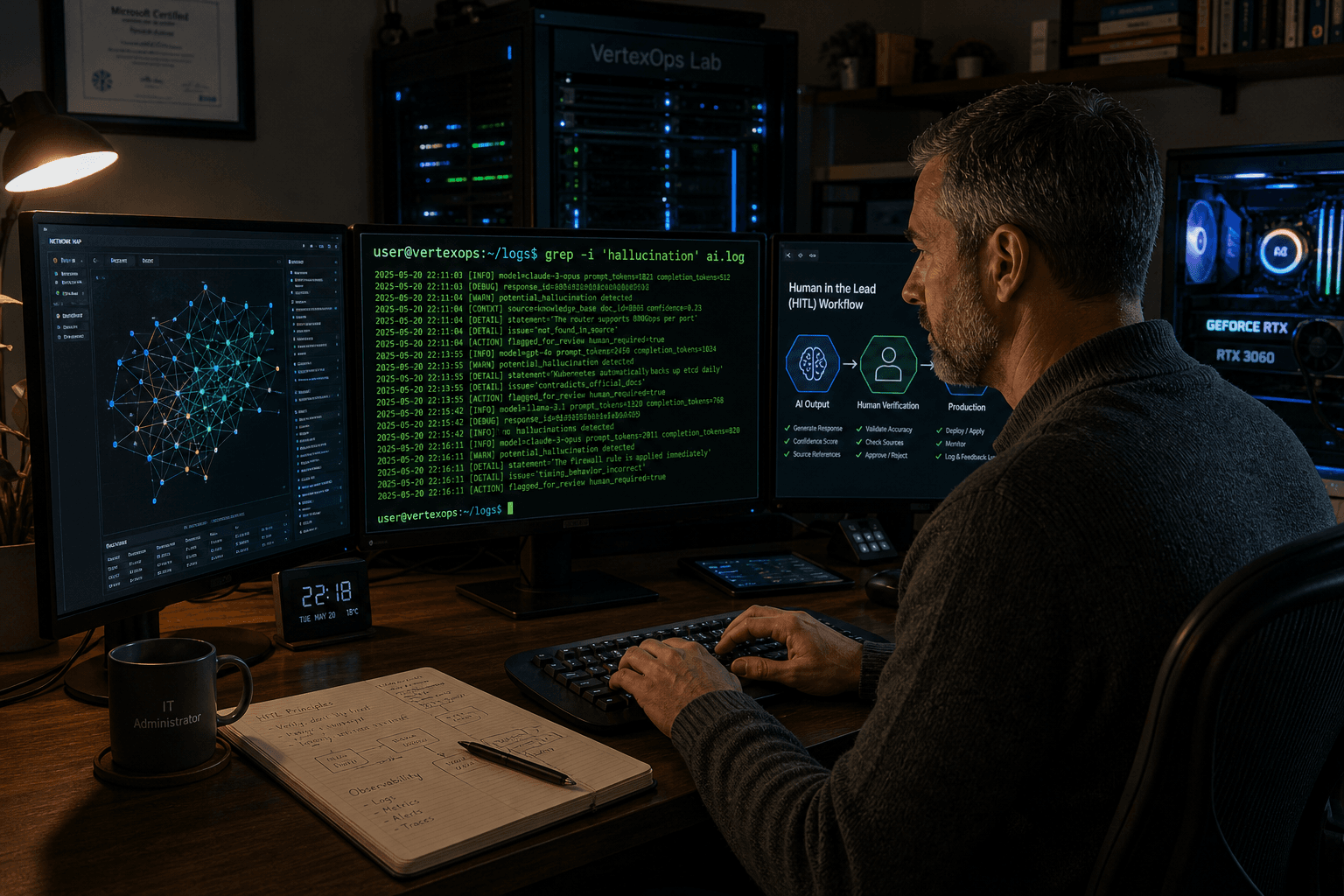
What is "Human in the Lead" (HITL) Engineering? HITL is a technical operational framework where AI models (LLMs) function as execution tools while a human engineer maintains accountability for business logic, security guardrails, and final system outcomes. In 2026, this has shifted from a theoretical concept to a budgetary requirement for infrastructure and cybersecurity teams.
The Reality of "Human in the Lead"
The underlying problem companies are trying to solve is real. Organizations tried to replace entire departments with LLMs and discovered they had simply built a faster way to make mistakes at scale. Now they need people who understand the business logic well enough to build the guardrails, catch the hallucinations before they become a million dollar incident report, and actually own the outcomes.
That last part matters. Ownership. AI does not have it.
Why Infrastructure Still Needs Humans
This is especially visible in cybersecurity and infrastructure, which should not surprise anyone who has been watching the breach disclosures come in this spring. You cannot patch a wormable flaw with a chatbot. You cannot audit a compromised OAuth token chain or trace lateral movement through a compromised environment by asking a model to "check for anomalies." Someone has to know how the stack actually fits together, at every layer, and be willing to be accountable when it does not.
That is not a knock on AI tooling. I run Ollama, LiteLLM, and Open WebUI on an RTX 3060 in my homelab and I think about this stuff constantly. The tools are genuinely useful. But useful and autonomous are very different things, and I think the industry spent about eighteen months confusing the two.
The Strategic Shift
The bar for entry is higher than it was a few years ago. You cannot slide in with surface level skills and expect the job market to carry you. What has changed, and what actually matters here, is that the people who can bridge technical execution and real strategic thinking are in a better position than their counterparts were at any point in the last five years.
Not because the machines got dumber. It is because organizations finally have enough scar tissue to know what they actually need. The realignment is real. The demand is real. It is just landing on a narrower target than a lot of people expected.
About the Author Kerry Kier is a Systems Engineer specializing in infrastructure, AI, and public safety technology. He maintains an extensive homelab in Sacramento, California, where he focuses on digital sovereignty and local-first AI solutions.