The Patch Queue Is the New Vulnerability
AI tools are finding bugs faster than the industry can fix them. The bottleneck moved -- and no one told the people at the end of the pipeline.

Defenders finally have AI tools powerful enough to find bugs faster than attackers can exploit them. Nobody asked what happens when the patches start arriving faster than teams can deploy them.
In April, Mozilla's Firefox security team shipped 423 bug fixes in a single month. Their monthly average for all of 2025 was about 21. A large share of that difference came from running an agentic AI harness built around Anthropic's Claude Mythos Preview against the Firefox codebase -- Mythos alone identified 271 of the 423 bugs fixed that month.
Some of those bugs were genuinely old. One was a 15-year-old defect in the <legend> element, triggered by a sequence of edge cases spanning recursion stack depth limits, expando properties, and cycle collection. Another was a 20-year-old XSLT vulnerability involving reentrant key() calls that free a hash table's backing store while a raw entry pointer is still in use. These weren't hypothetical issues or static analysis noise. They were real, reproducible security bugs -- some potentially exploitable with enough attacker effort -- that had been sitting in production code for years -- in some cases, most of a developer's entire career.
Mozilla's own engineers captured the experience in a line that stopped me cold: "it's cheap and easy to prompt an LLM to find a 'problem' in code, but slow and expensive to respond to it."
That sentence is the article. That sentence is everything.
The security industry has spent the last several months talking about how AI has inverted the exploit timeline -- how Mandiant's M-Trends 2026 report shows mean time to exploit at an estimated -7 days, meaning attackers are in before patches exist, how the access broker handoff from initial compromise to a secondary threat group has collapsed from over eight hours in 2022 to 22 seconds in 2025. All of that is real and worth taking seriously.
But there's a second inversion happening alongside it that nobody is writing about, and it's the one practitioners are actually going to feel first. The defensive AI tools are working. The bugs are being found. And the patch pipeline -- the humans and processes and maintenance windows and SLAs on the other end -- is about to get hit with a volume of work it was never designed to handle.

Palo Alto Networks disclosed 75 security vulnerabilities in their May "Patch Wednesday" advisory -- roughly seven times their typical monthly volume. This wasn't an anomaly or a particularly bad month -- it was the result of running frontier AI models against their own codebase for the first time at scale. In the same Patch Tuesday cycle, Microsoft disclosed 16 Windows networking and authentication vulnerabilities found by their new multi-model agentic scanning harness, MDASH, which coordinates over 100 specialized AI agents across an ensemble of frontier and distilled models. Oracle, which has been on a quarterly patching cadence for roughly two decades, announced it was switching to monthly Critical Security Patch Updates starting May 28, explicitly citing AI-accelerated vulnerability discovery as the reason.
Through the first five months of 2026, Microsoft has already patched over 500 CVEs -- a pace that, if it holds, would exceed the annual record of 1,245 set in 2020. And this is with the AI scanning programs still in early deployment.
The industry is celebrating this. The framing is almost uniformly positive: defenders are finally using AI to find bugs before attackers do, the playing field is leveling, the exploit window is closing. Palo Alto's tech chief wrote that "this is the light at the end of the tunnel: a future where software is secure by design." Firefox CTO Bobby Holley declared that "defenders finally have a chance to win, decisively."
I think they're right that the tools work. I'm less sure anyone has thought through the operational consequences for the organizations on the receiving end of all these patches.
Consider what the last month actually looked like from a patch management perspective if you run an enterprise environment with meaningful Microsoft, Palo Alto, and Oracle footprint.
Microsoft's May 2026 Patch Tuesday addressed well over 100 vulnerabilities, including CVE-2026-41089, a 9.8-severity Netlogon stack-based buffer overflow that allows unauthenticated remote code execution against domain controllers with no credentials or user interaction required. CVE-2026-41096, also 9.8, is a DNS Client heap-based buffer overflow that runs on essentially every Windows machine and can be triggered by a malicious DNS response. You also have four Word Preview Pane RCEs that can fire without opening an attachment -- just receiving an email is enough. Meanwhile, Palo Alto just disclosed 75 issues across your perimeter security stack, Oracle is pushing its first monthly CSPU on May 28, and the Secure Boot certificate deadline is June 26.

None of those land in the same maintenance window. Each has a different risk profile, a different rollback plan, a different set of downstream systems to test against. A domain controller patch is not the same operational lift as a browser update or a network appliance firmware push. Your DNS infrastructure doesn't patch itself during a Tuesday night window without someone watching it. If you're running Hyper-V hosts with untrusted workloads or multi-tenant VDI, that's a separate track from everything else.
Note: The security content in May was actually relatively calm by 2026 standards -- the first zero-day-free Patch Tuesday in roughly two years. Imagine what the month looks like when every major vendor's first AI-assisted full scan lands simultaneously and they're all disclosing at Palo Alto's ratio of 75 vulnerabilities to one initial scan.
Over the course of the response, more than 100 people contributed code to the overall effort. Mozilla described it as "long days" and said "staying on top of this unprecedented volume" took everything the team had. Mozilla is not a small organization. They have experienced browser security engineers, dedicated release infrastructure, and a testing apparatus built over two decades. They still found the volume genuinely hard.
Microsoft's VP of Agentic Security said explicitly that "the durable advantage lies in the agentic system around the model rather than any single model itself." The finding matters, but so does the response pipeline. MDASH is a structured system that ingests code, builds a threat model, runs auditor agents over candidate paths, runs debater agents to validate findings, deduplicates, generates proof-of-concept exploits, and hands off to engineers. The harness is the product. The model is one input.
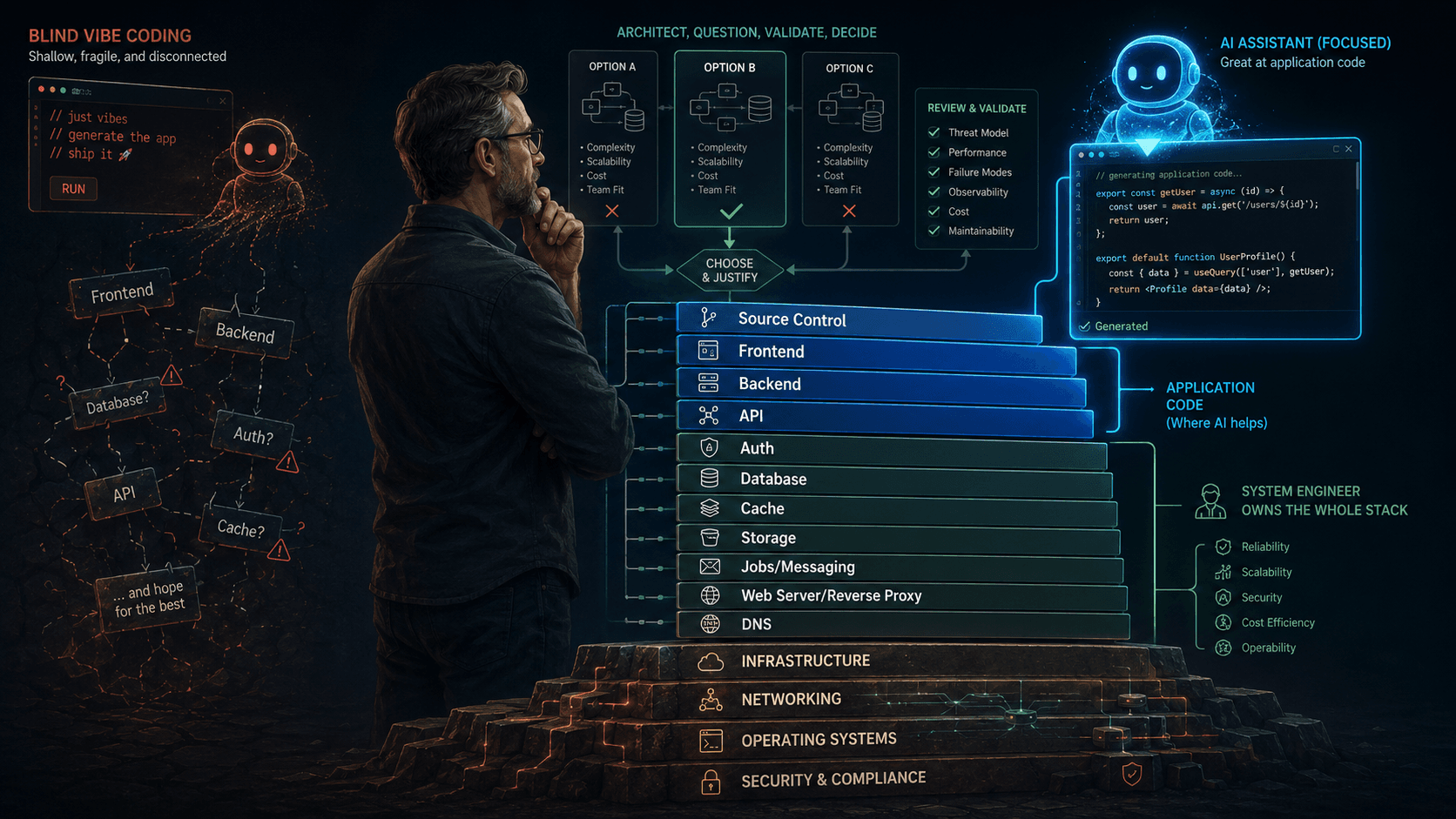
What that means operationally is that the organizations getting safer right now are the ones that built the full pipeline -- the harness, the validation layer, the triage capacity, the engineering bandwidth to actually fix what the scan finds. Mozilla deployed 100+ engineers. Microsoft built 100+ agents backed by an entire Autonomous Code Security team. Palo Alto is explicitly running a multimodel approach across Mythos, Opus 4.7, and GPT-5.5-Cyber because each model catches things the others miss.
The patch volume those organizations generate flows downstream to every organization running their software. But the scanning capacity -- the ability to find your own bugs before someone else does -- doesn't flow downstream automatically. It requires building the same kind of pipeline, which requires engineering investment that the largest vendors have and most of their customers don't.
This is the part of the story that hasn't been written clearly. The first-mover vendors are hardening fast. The long tail is not.
There are thousands of software vendors whose products run somewhere in your environment -- middleware, monitoring tools, VPN clients, backup agents, authentication libraries, embedded system firmware -- that are not in the Project Glasswing program and are not running MDASH and have not yet pointed a frontier AI model at their codebase. Their bugs are in the same state they've always been in. The difference is that the attack side of this equation is also evolving, and the tools that make Mozilla's engineers say "vertigo" when they see the findings are the same tools that will eventually reach a broader audience.
The large vendor hardening actually sharpens the relative exposure of the long tail. When Microsoft's networking stack and Palo Alto's firewall products become measurably more secure through AI-assisted scanning, the softer targets become more attractive. That's not a hypothetical -- it's how adversarial optimization works. You go where the resistance is lowest.
The "three-to-five-month window" warning from Palo Alto is real. But most organizations seem to be interpreting it as a call to start scanning their own code, which is correct but incomplete. The more immediate operational question is: what does your patch management program look like when vendor CVE volume starts multiplying across your entire software footprint?
Your SLA probably says critical CVEs get deployed within 30 days. That was written for a world where Palo Alto's monthly disclosure was a fraction of what a single AI-assisted scan just produced. Where Microsoft averaged three to four zero-days per month but otherwise kept the non-exploited critical count manageable. Where Oracle's quarterly CPU was a known, planned event that your team could absorb on a predictable schedule.
The answer to a 5x increase in patch volume isn't working five times as many hours. It's building the prioritization discipline to accurately separate what needs emergency treatment from what can run through steady-state process -- and making sure your emergency lane doesn't flood every time a major vendor's AI scanner wakes up. That also means starting to ask your vendors different questions: do you have an AI-assisted scanning program? What is your current CVE disclosure cadence, and do you expect it to change? A vendor that can show you a pipeline and a cadence that reflects what AI scanning actually finds is a measurably different risk profile from one whose quarterly patch release contains the same handful of CVEs it always has.
Mozilla's engineers said defenders can "finally find them all" -- and I believe the capability exists. But finding them all and fixing them all are different problems on different timelines with different resource requirements. The finding side just got dramatically faster. The fixing side is still running on the same human-hours and maintenance windows and change management processes it always has.
That asymmetry is the actual vulnerability right now. Not the exploits themselves, but the gap between the rate at which AI is surfacing them and the rate at which the organizations affected can absorb and act on what gets found.
The patch queue is the new vulnerability. And so far, almost no one is treating it that way.